
By Coaxial Cables 2063
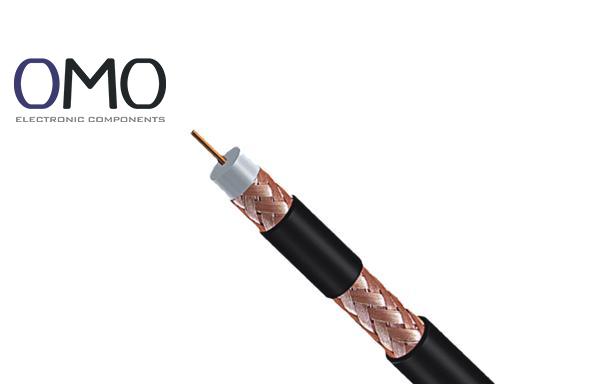
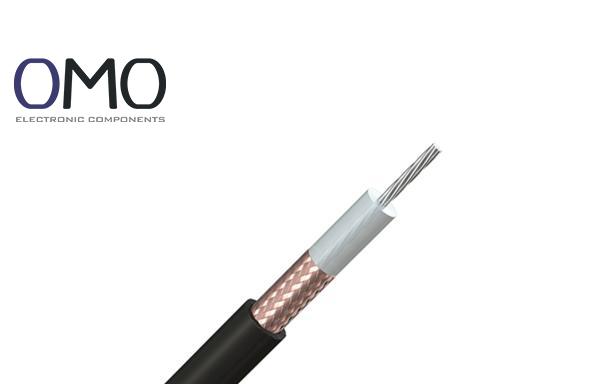
A coaxial cable consists of four layers: a central conductor, an insulation layer, a metal shielding layer, and an outer jacket (see Figure 1). This "concentric" design effectively resists electromagnetic interference (EMI). Coaxial cables are widely used in cable television (CATV), broadband networks, and security surveillance systems. According to the Electronics Industry Association (EIA), the total length of coaxial cables used globally each year could circle the Earth 1,200 times. RG6 and RG11 cables account for 75% of the market share.
RG6 is the standard choice for home entertainment systems. It features an 18 AWG copper core (approximately 1mm in diameter) and is suitable for signal transmission up to 200 meters. RG11, on the other hand, uses a thicker 14 AWG conductor (1.6mm diameter), maintaining signal strength over distances of up to 300 meters. A test conducted by a satellite service provider showed that using RG11 reduced signal loss by 42% over a 500-meter transmission.
| Feature | RG6 | RG11 |
| Conductor Diameter | 18 AWG (1.02mm) | 14 AWG (1.63mm) |
| Outer Diameter | 6.9mm | 10.3mm |
| Weight(per 100m) | 4.2kg | 6.8kg |
| Bending Radius | ≥50mm | ≥80mm |
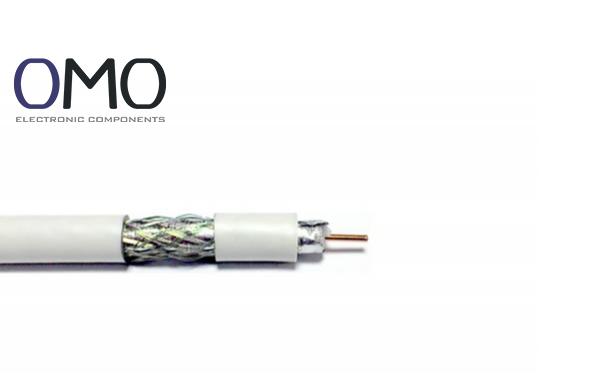
Product Advantage 1: RG11 has a thicker shielding layer (aluminum foil + 96-braid tinned copper mesh), doubling its anti-interference capability. This makes it ideal for environments with strong electromagnetic fields, such as factories.
In a 1080P video transmission test, RG6 experienced a signal loss of -15dB at 150 meters, whereas RG11 only lost -9dB at the same distance (see Figure 2 line chart). When the transmission distance exceeds 200 meters, RG11's bandwidth advantage becomes more evident. It can stably support 3GHz high-frequency signals, which is crucial for 4K/8K ultra-high-definition (UHD) transmission.
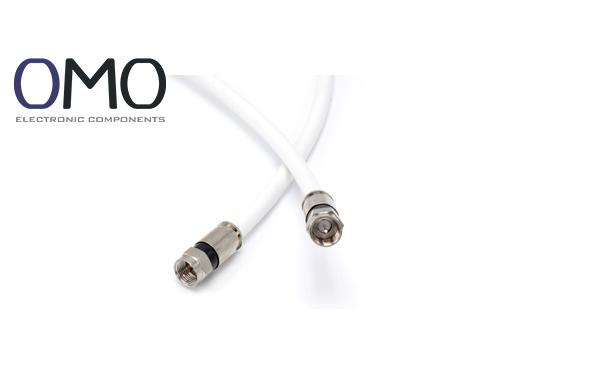
In humid environments, injection-molded waterproof connectors (IP68-rated) must be used. A case study showed that when RG11 cables were not properly grounded, lightning strikes caused a 67% equipment failure rate. However, properly grounded systems had only a 3% failure rate.
Product Advantage 2: RG11’s polyethylene (PE) jacket has a wider temperature resistance range (-40℃ to 90℃), 20℃ more than RG6, making it suitable for extreme climate conditions.
Product Advantage 3: In highway surveillance projects, RG11 has a 20-year lifespan, five years longer than RG6, reducing maintenance costs by 40%.
RG6 coaxial cable features a thicker construction, with quad-shielded variants being the standard for transmitting internet, cable television, and satellite signals. Known for its superior signal integrity and long-lasting performance, this cable type is widely favored in both residential and commercial installations due to its versatility.
RG6 and RG11 each possess distinct strengths catering to specific requirements. While RG6 is optimal for residential TV setups and commercial environments, RG11 excels in scenarios demanding extended cable runs or higher-frequency signal transmission.
RG11 coaxial cable serves as an excellent solution for diverse installations demanding superior signal integrity across extended distances. This durable cabling option finds frequent application in multiple domains including:Cable/satellite TV distribution;Security camera networks;Broadcast transmission setups;Professional audio/video broadcasting environments.
RG6 coaxial cables are commonly designed with a standardized impedance of 75 ohms. This 75-ohm specification has become the industry norm for coaxial conductors used in numerous transmission applications, including cable TV systems, satellite TV installations, broadband internet connectivity, and various other signal distribution purposes.
The maximum voltage capacity of RG6 coaxial cable is typically designed to handle up to around 600 volts. Applying voltages beyond this threshold could lead to excessive heat generation, compromised insulation integrity, or other operational failures. These specifications might differ based on the cable producer and its intended use scenario, as performance parameters can vary between manufacturers.